

How to Choose the Best Burr Coffee Grinder
A grinder is one of the most important tools in the coffee-making arsenal. What is the best one to purchase?
Burr grinders grind beans between two serrated, rotating surfaces instead of slicing with blades. They're generally thought to be superior to blade grinders. What features should you look out for in the burr mill?
1. Conical Burrs
A conical-shaped burr mill has an angled set of teeth and an elongated burr ring that is inserted between the other. This shape lets it grind more efficiently, since the burrs revolve around a single central point. The conical teeth cut the beans more evenly, and produce less heat, which is a good thing because excessive heat can lead to bitter notes in your coffee. Conical burrs also last longer than flat ones. Flat burrs are susceptible to warping and become dull quickly, which results in unevenly ground coffee that is not evenly ground. They are also more brittle, meaning that small stones and other debris could damage the burrs over time. Flat burrs also create more noise and require more frequent maintenance and cleaning.
Many burr grinders on the market claim to be "burr grinders," but they have flat burrs, or no burrs even. These "false burr grinders" feature large, flat teeth and are often coupled with weak motors that produce uneven ground. They are not true burr grinders and, contrary to the opinions of some enthusiasts, don't produce the same quality of grind as actual burr grinders.
Although some experts disagree some believe that the burrs that are used in the grinder have an impact on the final taste of the coffee. These theories are mostly anecdotal but they have a powerful hold on the minds and hearts of coffee enthusiasts. For example, some think that conical burrs can bring out the individual flavors of exotic beans while flat burrs can soften and enhance dark roasts.
It could be true, but it is important to think about if you want your grinder to have a significant impact on the quality of your coffee. Only by testing the grinder with the beans you plan to use can you be sure. The overall design of the grinder and its operational features will have a greater effect on the final cup of coffee than the type of burrs. This is the reason it's crucial to assess a grinder based on other factors, such as the reputation of the brand and reviews from customers.
2. Convenience
The Baratza Encore is a burr grinder that a lot of coffee enthusiasts swear by. It has been praised by numerous reviewers as a "time tested choice" that is great value for money, and is well-suited for French press, French drip, and cold brew.
According to the company, the grinder uses rotating metal burrs rather than blades to grind beans. This results in more uniform grounds than a grinder or other burr grinder. The burrs also produce less heat and preserve the bean's aroma and flavor.
Blade grinders, on the other hand are prone to producing excessive heat and unbalanced-sized ground which can affect the taste of your finished cup. Burr grinders are also quieter than blades grinders. However, this can differ based on the model and the brand.
Although the majority of burr grinders that we test have conical burrs, there are some that make use of flat burrs (two discs with cutting teeth facing each other). These grinders aren't suitable for espresso, as they can be difficult to calibrate. They are also less expensive and more difficult than high-end flat-burr machines like the Fellow Ode Gen 2 and the Baratza Virtuoso+.
The grinders we tested let you choose the amount of time the machine will grind, which could be helpful if you are brewing espresso. Some grinders, including our top choice Baratza Sette 270, have an integrated timer that's precise to one-tenth of seconds. However, this feature isn't required for the majority of brewing methods, and the majority of grinders under $200 use what's a fancier version of the windup timer.
The most affordable models, like the Porlex II or the Capresso infinity, have manual burrs. This means that you have to turn them manually yourself to grind your coffee. Coffeee takes more effort however, it's a good choice if you want simple, compact and cost-effective option that doesn't require electrical power.
The Breville Smart Grinder Pro is another affordable option that uses a burr grinder. It's louder than some of the other models we've tested however it's still acceptable if you don't mind a little noise. The quieter a grinder will be, in general the more expensive it will be. This is due to the more advanced materials and sophisticated soundproofing technologies.
3. Simple to Use
If you're just beginning to discover the world of home coffee brewing there's one piece of equipment that experts agree is essential is a burr mill. These grinders produce a finer, more consistent grind than a blade grinder, and will help you make brews with better balance of flavor, body and acidity. They are typically more reliable. As you might expect, a high-quality burr mill could cost up to $200 and is difficult to use.
We asked experts for their suggestions on the easiest electric burr grinders to use. They recommend the OXO conical burr grinder to a lot of people, including those who don't wish to spend a lot of money. It has multiple settings to accommodate a variety of different brewing methods, from pour-over, French press, to drip coffee. It also did well in our tests.
It's also quieter than other electric grinders that we tested and doesn't generate the same amount of heat. This is crucial because too much heat can damage the delicate aromas of your beans.
The OXO grinder has just one disadvantage It grinds the best on the more coarse end of its range. This can be a problem for espresso. If you're making espresso, a higher-end burr grinder such as the Baratza Encore might be a better choice.
Manual burr grinders powered by cranking are simpler to use and perfect for those who drink only one or two cups of coffee a day. They're a good choice for those who travel or need to make a single portion of pour-over.
Chris Morocco, Bon Appetit Test Kitchen's director, loves the Fellow Ode Gen 2 Burr Grinder. It has 41 settings that can be easily adjusted and produces a wonderful beverage using any method - except for espresso (the flat-steel burrs don't grind precisely enough). It's a breeze to use by anyone so you don't mind some messes or chaff that fly away.
4. Cost
A quality burr grinder will set you back around a hundred dollars, but it's worth the cost. The grinding mechanism is simple enough that even a beginner can figure out how to get the most out of it, and you'll save money in the long run by ditching the pre-ground coffee and bad-for-the-environment coffee pods.
Conical burr grinders are the standard in electric home units, and they're a great choice for most people just starting out with this whole grinding-your-own-beans-at-home thing. They produce a small amount of fines (the tiny pieces of coffee that end up smaller than the official grind size you select) However, this won't be noticeable to the majority of people who drink coffee and it's a low price to pay for excellent-tasting consistently-sized coffee grounds.
Flat burrs are two discs that have cutting teeth that are facing each other. They are not as common but are favored by coffee geeks because they produce a more uniform grind size, which is ideal for French press and espresso. The downside is that they can be expensive to purchase, and you might require a new burr for every different roast level or brew type.
According to our experts, the Baratza has the best price and capabilities for burr mills. It's priced at less than $200 and is far cheaper than other models with similar capabilities. It comes with a 64-mm, flat brewer set that is perfect for all types of brewing techniques. It is easy to upgrade to other sets, including those from SSP.
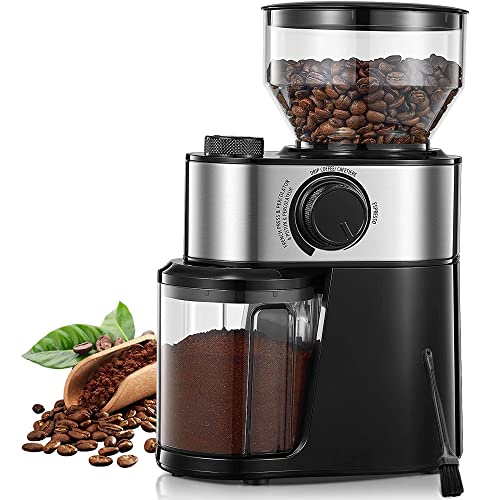
The OXO is a similar model that is affordable with a proven track record in our tests. The burrs on this model aren't as precise as the burrs in higher-end models, but its user interface and the variety of settings are suitable for both French press and drip. While true coffee lovers will want a more advanced model, the OXO is a great starting point for most people.
We also tried a few manual burr grinders for those who prefer grinding their coffee with their hands. These are great for traveling and for people who only require two or three cups of coffee at one time. These models, which employ the same mechanism for grinding as electric burr grinders, use a crank instead of a motor and are usually much quieter than electric units.